Last updated: September 10, 2026
Key Takeaways
- I would rather clean a coil and restore 2 inches of clearance than blame the compressor too early.
- A $15 filter or a $30 vent cleaning brush can solve what feels like a major failure.
- The difference matters because the fix can be a $20 maintenance part, a utility adjustment, or a full replacement at a much higher cost.
- A 240-volt dryer on an undersized circuit, a loose connection, or a long run with voltage drop can tumble clothes but still dry slowly.
If your appliances are costing more to run, struggling to keep up, or failing sooner than they should, one culprit is usually not enough to explain it. This appliances, utilities, and performance complete guide shows how to read the fit between the appliance, the utility service behind it, and the way the appliance is being used so you can spot the bottleneck, decide what is worth fixing, and know when an appliance is simply the wrong tool for your home.
What this appliances, utilities, and performance guide covers, and what it assumes you already know
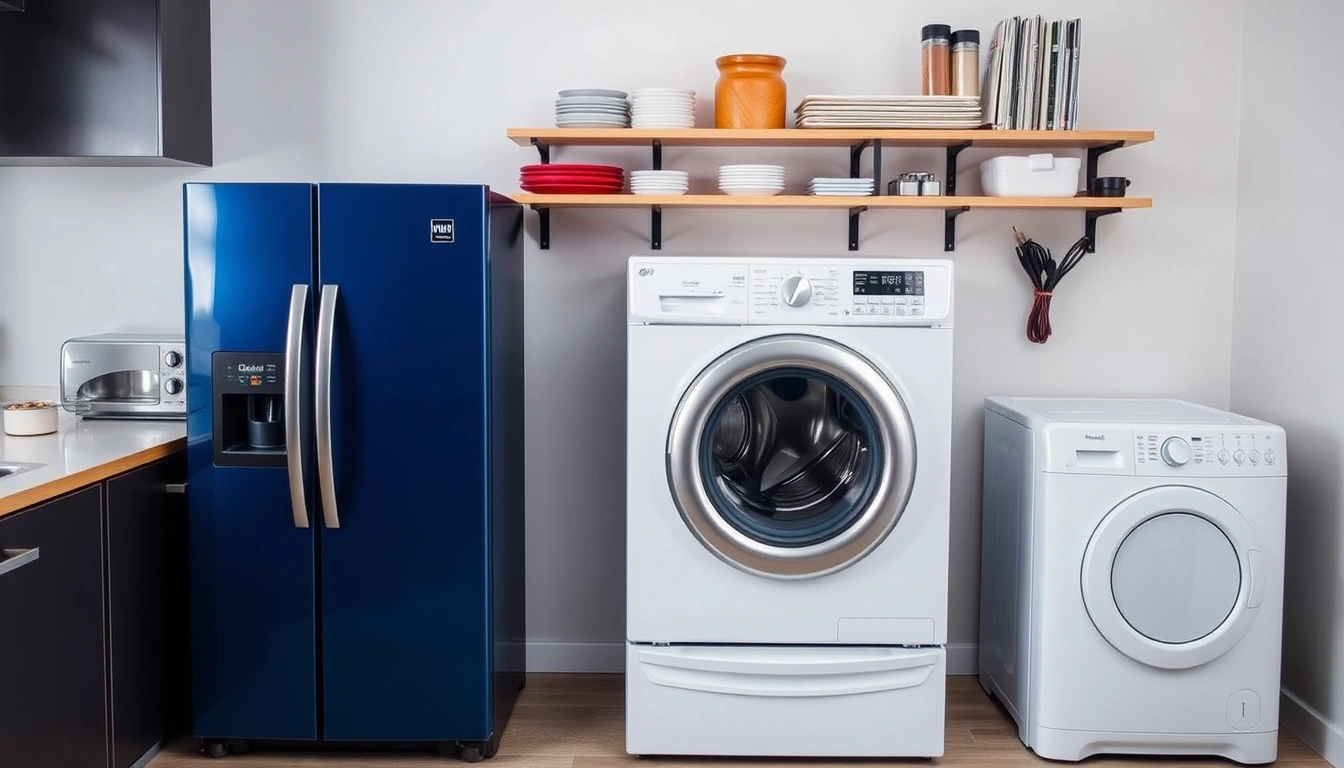
This appliances, utilities, and performance complete guide is for a homeowner or renter who wants better appliance performance without guessing. You probably already know the basics: a refrigerator uses electricity, a water heater uses gas or electric power, a dryer needs venting, and utility bills are monthly. What you may not know is how to turn those facts into better performance.
The subject here is the chain from utility to appliance to result. “Performance” means the useful work the appliance actually delivers: a dishwasher getting dishes clean in one cycle, a heat pump keeping the house comfortable without short cycling, a washer extracting enough water that the dryer does not run twice as long, or a water heater recovering fast enough for a normal morning. Any of that can go wrong because the appliance is undersized, the utility supply is weak, the installation is wrong, or the operating conditions are off. Messy, yes. Also fixable.
Some cases are not DIY territory in the practical sense. I am not talking about legal disclaimers; I am talking about bad matches between the problem and the person. Gas odor, repeated breaker trips, scorch marks, a leaking water heater tank, or any need to modify fixed wiring, piping, or venting means stop and get qualified help. Those are not “tune-up” issues. They are failure modes.
Good news: a lot of poor performance is diagnosable without opening anything dangerous. Check voltage assumptions, water pressure, vent path, load size, filter condition, and cycle settings. You can also tell when a newer appliance is underperforming because the utility conditions around it are outside the range the manufacturer assumed. That is where many generic articles go wrong — they blame the appliance, when the supply or installation is the real limiter.
A useful rule of thumb is this: if the appliance only works badly at certain times of day, after a heavy load, or in certain weather, start with utilities and installation before shopping for a replacement. If it fails all the time in normal conditions, the appliance itself may be the limit. The trade-off is plain: a $20 part or a small adjustment is a lot nicer than buying a whole new unit.
How do appliances, utilities, and performance connect?
Through capacity, quality, and timing. Capacity is how much the utility can deliver. Quality is whether it arrives in the form the appliance expects. Timing is whether the supply is steady when the appliance needs it.
Electric appliances are sensitive to voltage and circuit capacity. A 240-volt dryer on an undersized circuit, a loose connection, or a long run with voltage drop can tumble clothes but still dry slowly. Gas appliances care about inlet pressure, regulator condition, combustion air, and venting. A furnace or water heater with poor combustion air may run, but run poorly. Water-fed appliances care about pressure, flow rate, temperature, and hardness. A dishwasher connected to lukewarm water and mineral-heavy water may need more time and still leave residue.
This is why I do not like the phrase “appliance problem” on its own. It leaves out the utility side of the equation. An appliance can be mechanically sound and still perform badly if it is starved of power, water, gas, or exhaust path. The reverse is also true: a utility system can be fine, but a clogged condenser coil, a packed lint screen, or a wrong setting can make a good appliance look bad.
The terminology helps. “Duty cycle” is the amount of time a device is actively working versus resting. “Short cycling” means it turns on and off too often, which wastes energy and wears parts. “Voltage drop” is the loss of electrical voltage along a circuit under load. “Static pressure” is resistance to airflow in ducts or vents. “Hard water” is water with enough dissolved minerals, mainly calcium and magnesium, to affect detergents and scale buildup. These are not buzzwords; they explain why a machine underperforms even when it powers on.
A lot of complaints are just mismatches between expected and actual conditions. Heat pumps are the clearest example. They are efficient, but they are not magic. Their output falls as outdoor temperature drops, and their performance depends on sizing, defrost behavior, and the house’s heat loss. Put a heat pump in a leaky house with oversized duct losses and it can look mediocre even if the unit itself is a decent model. The same pattern shows up with tankless water heaters, induction ranges, dryers, and high-efficiency washers. The appliance is only one part of the system.
What should you ask first? What has to arrive at the appliance for it to do its job: electricity at the right voltage, gas at the right pressure, water at the right flow, air with low enough resistance, and a load that fits the machine’s design. That is the whole game.
What should I check before I blame the appliance?

Therefore, check the supply, the settings, and the load first. Those three checks catch more real-world performance problems than a replacement ever does.
Start with the utility feed. For electric appliances, verify that the right breaker is on and not tripping under load. For gas, note whether other gas appliances are also weak; that points to a house-wide supply or pressure issue. For water-fed machines, confirm the shutoff valve is fully open and the inlet screen is not packed with grit. For vented appliances, make sure the vent path is not crushed, blocked, or excessively long. A dryer vent should not be treated like a decorative tube; lint accumulation and kinks can cut airflow sharply, so if the path is unclear or inaccessible, consult a qualified technician or vent professional.
Next, check the operating setting. Many dishwasher complaints come from low-temperature cycles, overloaded racks, or too little detergent. Many washer complaints come from overloading, which prevents proper agitation and rinse action, so if the machine still seems off after a basic load check, consult the owner’s manual or a service professional. Many refrigerator complaints are actually airflow problems caused by overpacked shelves or blocked interior vents. A machine can be “working” and still underperform because the selected mode does not match the load.
Then look at the environment. Is the laundry room cold enough that a heat pump dryer struggles? Is the refrigerator against a wall with almost no condenser clearance? Is the water heater set low enough to force long recovery times? Is the room full of dust or pet hair that clogs intake screens and coils? I would rather clean a coil and restore 2 inches of clearance than blame the compressor too early.
Finally, compare the load to the appliance’s own limits. A clothes dryer that is jammed with a wet king-size comforter will not behave like it does on a normal load. A dishwasher overloaded with plastic containers nested together will not clean as if it were half full. A water heater serving two bathrooms at once will not recover like one serving a studio. Performance is usually load-relative, and the rating only makes sense in relation to what the machine was designed to handle.
The practical threshold is simple: if you can explain the symptom by supply, setting, or load, do not jump straight to replacement. If you cannot, move to the appliance’s wear parts and condition. That order saves time and money.
How do I diagnose the problem step by step?
You diagnose it by checking the system in a fixed order: supply, installation, operating condition, and then the appliance itself. That order keeps you from chasing symptoms, and it works for most household equipment from a dishwasher to a furnace filter to a heat pump water heater. If the sequence still does not point to a clear cause, consult a qualified technician rather than forcing a diagnosis.
- Confirm the symptom under a known load. Run the appliance on its normal cycle with a typical load, not a special case. For a dishwasher, use a standard mixed load and a full detergent dose; for a dryer, use a medium load of similar fabrics. Verify whether the result is consistently poor across at least two runs. A one-off failure points to the load, not the appliance. A repeating failure points deeper.
- Check the utility supply at the appliance. Confirm the breaker, shutoff valve, or gas supply is on and stable. For electric equipment, note any flicker, dimming, or tripped breaker. For gas equipment, check whether other gas appliances are also weak. If you see frequent breaker trips or smell gas, stop. The problem is no longer a simple performance issue.
- Inspect the access points that affect flow. Clean refrigerator coils, dryer lint screens, dishwasher filters, and furnace or HVAC return grilles. On vented appliances, check for crushed ducts, blocked exterior hoods, or heavy lint buildup. Verify that airflow is unobstructed. If cleaning restores a noticeable amount of performance, the problem was restriction, not failure.
- Measure the operating condition the appliance depends on. Check water temperature at the tap if the appliance uses hot water; many dishwashers need about 120°F water at the supply to perform well. Check room temperature for a heat pump or dehumidifier. Check the appliance’s setpoint against the actual result. If the machine is set correctly but cannot reach target conditions, the supply or environment is limiting it.
- Examine size and capacity match. Compare the appliance’s rated capacity to the job. A 40-gallon water heater has different recovery behavior than a tankless unit or an 80-gallon tank. Verify whether the current household demand exceeds what the appliance was designed to serve. A recurring shortfall at peak use means the appliance may be undersized for the house.
- Check wear parts and common failure points. Look for seals, belts, hoses, filters, igniters, heating elements, drain pumps, and door gaskets, depending on the appliance. The point is not to dismantle the machine; it is to identify the parts most likely to age out. If visible wear appears or a part has deformed, you have a specific fault. If all visible parts look intact but performance is still bad, the issue may be internal or control-related.
- Test one change at a time. Change only one variable per run: load size, cycle setting, filter cleaning, or water temperature. Keep the rest the same. If performance improves after one change, you have a lead. If nothing changes after several controlled checks, the issue is less likely to be user error and more likely to be a supply, installation, or internal defect.
- Document the pattern before you spend money. Write down when the problem happens, what mode was used, the load size, and the utility conditions. A good note says “dryer takes 90 minutes on heavy towels, lint screen cleaned, outside vent clear, 240-volt breaker stable,” not “dryer bad.” Specific notes help you decide whether a repair or replacement is rational. If the same symptom only appears during peak household demand or extreme weather, that pattern is the clue.
That process sounds slow, but it usually takes less than an afternoon because the early checks are fast. The point is not to perform every possible test. The point is to find the first broken link in the chain. If you reach step 6 and still have no useful lead, the appliance is probably beyond casual diagnosis or the fault is inside a sealed system. At that point, the right move is not guessing. It is to stop treating it like a settings problem.
Why do good appliances still perform badly?
Because good appliances still perform badly when the house around them does not meet their assumptions. That is the part people miss.
A high-efficiency dishwasher still needs sufficiently hot inlet water, clean spray arms, and the right detergent amount. A modern refrigerator still needs room to reject heat. A heat pump still needs airflow, a correctly sized refrigerant charge, and a house shell that does not leak heat faster than the system can supply it. A gas dryer still needs exhaust that is short enough and straight enough to move moist air out quickly. If any of those assumptions fail, the appliance looks weaker than it is.
There is also the mismatch between “rated performance” and “real-world performance.” Ratings are usually based on standardized conditions. A dryer’s published energy numbers do not tell you much about a long vent run full of lint. A water heater’s rating does not tell you how it will behave when three showers overlap with laundry. A refrigerator’s efficiency figure says little about a garage in August or a kitchen with poor air clearance.
I would take this seriously when the symptom is intermittent. Intermittent underperformance often means marginal utility supply or marginal installation. For example, a dishwasher that cleans fine at night but leaves residue at dinner time may be fighting lower incoming water temperature when the whole household is drawing hot water. A dryer that only struggles on humid days may have a marginal vent or a room with poor makeup air. A heat pump that seems noisy and weak only at certain temperatures may be entering defrost mode or hitting its lower capacity range.
There are also appliance categories that are simply less tolerant of bad conditions. Tankless water heaters are more sensitive to flow rate and inlet temperature than many tank systems. Condensing dryers need cleaner airflow management than older vented models. Induction cooktops need proper electrical service and correct cookware. Heat pump water heaters need enough surrounding air volume and temperature to work as designed. Put those machines in the wrong setting, and the complaint is not mysterious.
The honest take: performance is a system property. The appliance contributes, but the utility service and the building envelope often decide the outcome.
When should I stop troubleshooting and change the approach?
Consequently, stop troubleshooting and change the approach when the symptom points to a supply, safety, or design-limit problem rather than a simple fix. In plain terms: if the machine is being asked to do a job outside its conditions, stop forcing it.
Gas odor, soot, or yellow flames: combustion is not normal — stop using the appliance and get qualified help. Those are not performance quirks; they can indicate incomplete combustion or a venting problem.
Repeated breaker trips or warm outlets: the electrical circuit is being overloaded or has a loose connection — stop resetting and calling it “finicky,” because the risk is damage or fire, not slower performance.
Water around a water heater tank or a split hose: the failure is physical, not operational — shut off the supply and address the leak. A leaking tank is usually replacement territory, not tuning.
Crushed dryer vent, heavy lint buildup, or a blocked exterior hood: airflow is too restricted — stop running the dryer until the vent path is cleared. Continued use raises drying time and heat buildup.
Appliance is undersized for the household peak load: the machine is doing all it can, but the demand is too high — change the load pattern, split the task, or replace with a larger-capacity model if that pattern is permanent.
Short cycling in heating or cooling equipment: the system is turning on and off too often — stop assuming a filter change will solve it if the unit is oversized, the thermostat location is bad, or the refrigerant/combustion system has a fault. Short cycling wastes energy and wears components.
Sealed-system symptoms such as frost patterns, no cooling, or compressor running nonstop: the problem is inside the refrigeration circuit — do not keep guessing at settings. That usually needs specialized diagnosis.
Repeated poor results after controlled checks: supply, settings, load, and cleaning have all been ruled out — stop spending on small parts and decide whether the appliance is worth repair or replacement. At that point, the cost of guessing can exceed the cost of a more decisive fix.
The rule I use is simple: if the symptom suggests risk, stop. If the symptom suggests a design mismatch, change the use case. If the symptom suggests internal failure after you have ruled out the basics, do not keep treating it like a maintenance issue.
The mistakes people actually make, and what they cost
The biggest mistakes are usually not dramatic. They are ordinary assumptions that send you in the wrong direction.
-
Blaming the appliance before checking the utility feed. The cost is replacing a machine that was never the main problem. A weak gas supply, poor voltage, or low water flow can make a new appliance look bad too. The correct alternative is to verify supply first.
-
Overloading to “save time.” The cost is worse cleaning, longer dry times, poor rinse results, and extra wear on motors and seals. A washer or dishwasher packed beyond its intended load pattern cannot move water or detergent properly. The correct alternative is to split the load or use a second cycle when needed.
-
Ignoring airflow. The cost is longer run time, hotter components, and higher energy use. Dryer vents, refrigerator coils, HVAC filters, and condenser clearances all matter. The correct alternative is to clean, straighten, and clear the air path before deciding the appliance is worn out.
-
Using the wrong cycle or temperature. The cost is false complaints about performance, especially with dishwashers, washers, and heat pumps. Eco cycles are not the same as heavy-duty cycles. The correct alternative is to match the mode to the job, then compare the result.
-
Chasing small parts when the symptom is systemic. The cost is spending on knobs, sensors, or filters while the real issue is undersizing, bad installation, or supply limitation. The correct alternative is to identify the bottleneck first. If the dryer vent is the problem, a new belt does not help.
-
Treating intermittence as randomness. The cost is missing patterns tied to time of day, household peak demand, temperature, or humidity. The correct alternative is to log when the failure happens. A pattern often reveals whether the appliance is fine and the environment is not.
What this usually means in dollars is not subtle. A $15 filter or