Last updated: October 22, 2026
Quick Answer: For most outdoor kitchen shade options, a roof extension is the most protective choice, a pergola is the most balanced choice, and a freestanding umbrella is the most flexible. The right outdoor kitchen shade options depend on three things: sun, wind, and whether you need rain protection over the cook zone. A pergola suits partial shade and a defined entertaining space, a roof extension suits all-weather use, and a freestanding umbrella suits flexibility around a hardscape patio or side seating.
I write about outdoor living spaces with a focus on how materials, exposure, and cooking equipment affect the final build. That matters here because outdoor kitchen shade options are not just about comfort; they change glare, heat, cleanup, and how often the grill stays usable.
Key takeaways
- A pergola is the middle ground: good for filtered shade, visual structure, and a more open feel.
- A roof extension is the strongest choice when rain and strong sun are constant problems.
- A freestanding umbrella works best for light-duty shade near a dining area, not directly over a hot grill.
- Wind matters as much as sun. A tall, open structure can catch gusts in a way a fixed roof will not.
- Shade sails can help on a hardscape patio, but they are usually better for seating zones than for the main cook line.
- If the cooking area sits under a fixed cover, check local code, clearances, and any manufacturer guidance for the grill or range hood before building.
The real difference between a pergola and a roof extension
A roof extension wins when the goal is year-round protection over the actual cooking station. It gives the most reliable cover from direct sun and rain, and it makes the outdoor kitchen feel like part of the house instead of a standalone feature. That matters if the grill, sink, prep counter, and refrigerator all live in one line and need consistent protection.
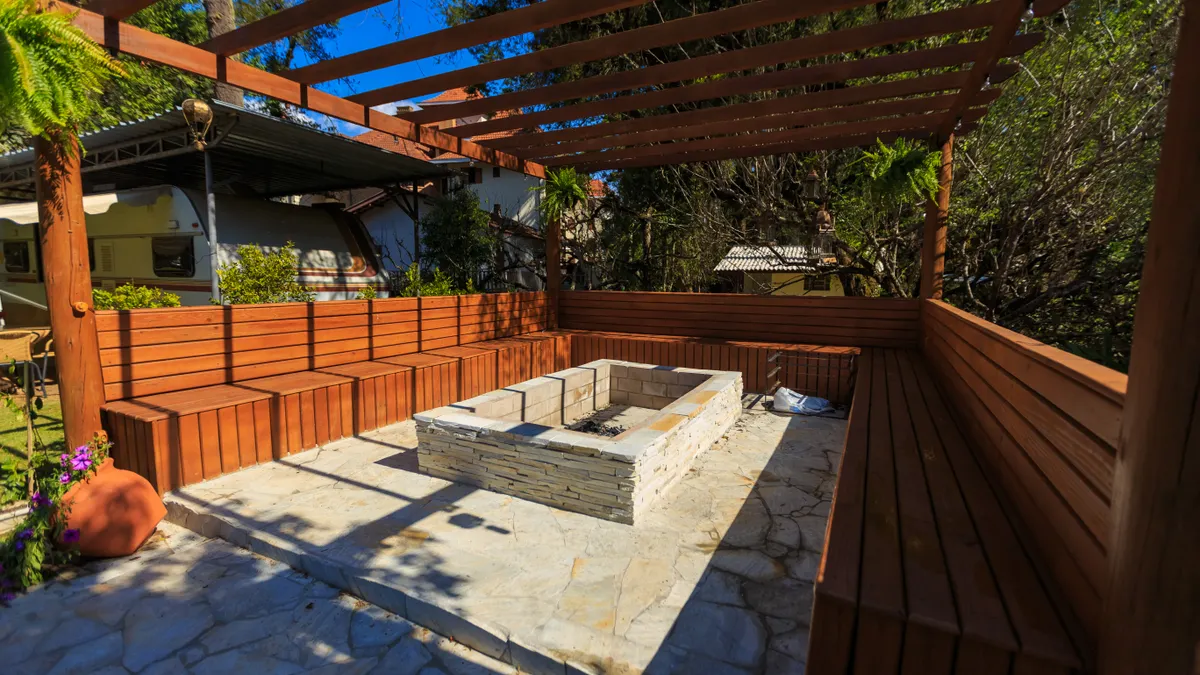
A pergola wins when the goal is shade without closing the space in. Its open top keeps airflow high and preserves a lighter look over a patio. That makes it a better fit for homeowners who want the kitchen to feel outdoors, not tucked under an enclosed canopy. The trade-off is obvious: most pergolas do not stop rain unless they add a retractable cover, polycarbonate panels, or some other roof-like insert.
The weak point of a pergola is performance in exposed conditions. On a west-facing patio with late-afternoon sun, the slats may cut glare but still leave the cook top hot. In a rainy climate, that means the cooking surface stays vulnerable, and stainless doors, drawers, or small appliances still need more weather care. A roof extension solves that, but it is a bigger structural decision and usually the most permanent of the three options.
For a reader comparing shade structure choices, the rule is simple: if the outdoor kitchen is an all-season station, pick the roof extension; if it is mainly a fair-weather gathering space, the pergola is usually the better-looking compromise.
Pergola: who should actually use this
A pergola is a good choice for someone who wants outdoor kitchen shade without losing daylight, air movement, or the open feel of a backyard. It fits especially well over a hardscape patio where the cook zone and dining zone share the same footprint, because the structure can define the space without making it feel boxed in. For many suburban backyards, that balance is the point.
Pergolas also make sense when the main problem is harsh sun, not sideways weather. Slatted shade can reduce direct overhead glare, and a 10-by-12-foot or 12-by-14-foot footprint is often enough to cover a grill island plus a narrow prep edge. The exact size matters less than the proportion: too small and the structure looks decorative instead of useful; too large and it starts to mimic a roof without delivering roof-level protection.
The drawback is that “partial shade” is not a marketing phrase; it is a real limitation. If the sun is low in the sky, the slats may not help much. If the area gets wind-driven rain, the cooktop, counter, and seating still get wet unless the pergola has an added cover system. That means more maintenance and more decisions. Fabric curtains, canopies, and louvered inserts all add complexity, and each changes how much light and airflow remain.
A pergola is not the right answer if the outdoor kitchen is exposed on all sides, sits in a storm path, or needs a dry surface for frequent use in shoulder seasons. It is a good fit for the reader who wants structure first and weatherproofing second.
Roof extension: the most practical choice for harsh exposure
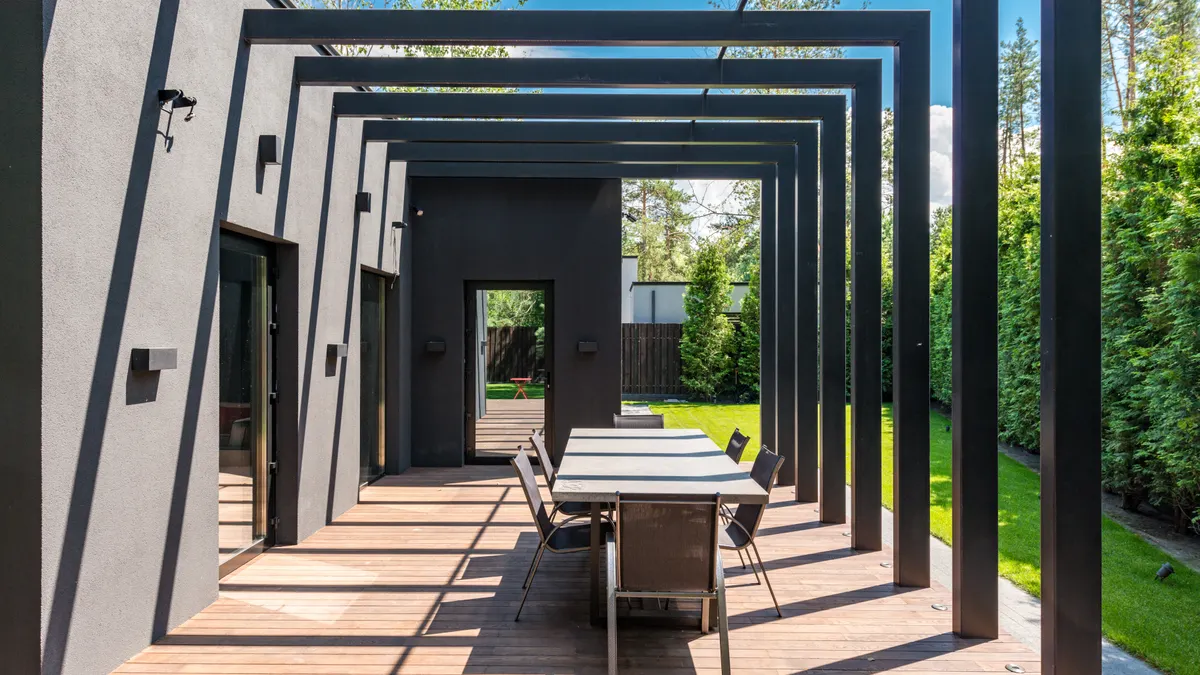
A roof extension wins for the kitchen that has to function in real weather, not ideal weather. It is the strongest option for intense sun, frequent rain, and cooking zones that need dependable protection year after year. If the outdoor kitchen is being tied into a house, pool cabana, or covered patio concept, the roof extension usually becomes the cleanest answer.
Its biggest advantage is simple: it covers the whole work triangle. The grill stays drier, the prep counter stays cleaner, and a person can keep cooking when a shower passes through. That makes it the most useful option for a homeowner who actually intends to use the kitchen often, not just admire it. It also tends to feel more permanent and better integrated with hardscape patio design than a freestanding structure.
The cost of that performance is rigidity. A roof extension is the least flexible choice, and that matters if the layout may change later. It can also darken the space more than expected, which is good in a hot climate and less welcome in a shaded backyard. In some settings, it needs the most careful coordination with support posts, drainage, and the existing roofline. That complexity is the price of real cover.
This option is not for a temporary setup, a rental property, or a backyard where the cook station might move next year. It is for the reader who wants the outdoor kitchen to behave like an outdoor room. If rain protection is a must-have rather than a nice bonus, the roof extension is the clear favorite.
Freestanding umbrellas: where they win and where they do not
A freestanding umbrella wins for flexibility, low commitment, and movable shade around a seating area or secondary prep spot. It is a fast way to reduce direct sun on a hardscape patio without building a permanent structure overhead. For a small gathering space or a compact outdoor kitchen near a dining table, that can be enough.
Umbrellas are useful because they place shade exactly where people sit. A large outdoor market umbrella can make a metal table, bar ledge, or adjacent lounge chair bearable in strong sun. The right base lets it shift as the sun moves, which is the one feature pergolas and roof extensions cannot offer. That matters in yards with shifting afternoon glare or a kitchen that is used more for serving than for full-time cooking.
The weakness is obvious: an umbrella is not a roof. It is poor at protecting appliances, counters, or a grilling zone from rain. It is also the most wind-sensitive option here. A canopy that is fine on a calm morning may become awkward on a gusty afternoon, which is why umbrellas are better for open seating than for the main cook line. Even a sturdy model with a vented canopy still has limits in exposed backyards.
A freestanding umbrella is the wrong choice if the reader wants a hard-working cover over the grill itself. It is the right choice if the need is temporary shade for guests, a breakfast nook, or a side bar attached to the outdoor kitchen but not part of the heat zone. For a flexible, lower-commitment solution, it earns its place.
The honest side-by-side
Pergola wins on atmosphere. Roof extension wins on weather protection. Umbrella wins on flexibility. That is the whole comparison in one sentence, but the details decide which structure belongs in the backyard.
| Criteria | Pergola | Roof extension | Winner for condition |
|---|---|---|---|
| Sun protection | Partial shade from slats or added cover | Full overhead cover | Roof extension for intense sun |
| Rain protection | Limited unless modified | Strongest of the three | Roof extension for wet climates |
| Wind exposure | Open design can feel exposed | More stable when properly built | Roof extension for gusty yards |
| Feel of the space | Light, architectural, open | Most enclosed and room-like | Pergola for open entertaining |
| Flexibility | Moderate if add-ons are used | Low; fixed structure | Umbrella for changing layouts |
| Best over grill zone | Acceptable with care | Best fit | Roof extension for primary cook area |
| Best over seating | Good | Good but heavier visually | Pergola for social patios |
| Installation complexity | Medium | Highest | Umbrella for simple setups |
| Compatibility with hardscape patio | Strong | Strong if planned early | Pergola for retrofits |
| Best for shade only, not weatherproofing | Yes | Sometimes too much structure | Pergola |
The table points to the same conclusion the practical use cases do. If the main problem is comfort, a pergola often gives enough relief. If the main problem is weather, only a roof extension solves it cleanly. If the area needs movable shade, an umbrella is the easiest answer, but it should stay near seating rather than the hot zone.
When shade sails make sense instead
A shade sail wins only when the patio needs broad sun relief and the project cannot justify a fixed overhead structure. It works best on a hardscape patio with strong sun and a simple, open layout. In that setting, a sail can cover a seating edge or bar area without the posts, lumber, or roof tie-in that a pergola or extension requires.
The downside is stability and precision. A sail needs proper anchor points and tension, and it can shed some rain but not behave like a roof. It also does less to define the outdoor kitchen as a destination. That makes it less convincing over the main cook station, especially if the grill, sink, and prep counter are all in regular use. For side shade, it is useful; for the core kitchen, it is usually a compromise.
This option belongs in the conversation because many readers do not need a full structure everywhere. Sometimes the real problem is one brutal section of afternoon sun. In that case, a shade sail can solve the seating side of the backyard while leaving the cook line under a pergola or roof extension.
What I would choose in each situation
Choose a roof extension if the outdoor kitchen will be used often, sits in strong sun or rain, and needs reliable cover over the grill and prep counter. Choose a pergola if the priority is filtered shade, open-air feel, and a structure that looks lighter over a hardscape patio. Neither if the setup is temporary, wind-exposed, or too small to give safe clearances and useful cover.
The exception cases are narrow but important. If the backyard is windy, a roof extension usually beats a pergola because it moves less in gusts. If the cook zone is only occasional and the real need is shade for guests, a freestanding umbrella may be the better fit. If the site is rented or the budget does not support permanent construction, the umbrella or a shade sail is the only honest answer. If the space gets low-angle sun in late afternoon, a pergola can disappoint unless it adds a cover system.
The cleanest rule is this: permanent cooking space gets permanent cover, and social seating gets movable shade. That distinction keeps the backyard from becoming overbuilt in one place and underprotected in another. For a bigger planning picture, I’d pair this decision with the broader guidance in the hub on planning an outdoor kitchen project and the related guide on patio shade ideas.
What is the best shade for an outdoor kitchen?
The best shade for an outdoor kitchen depends on how exposed the space is and how often it will be used. A roof extension is best for full weather protection, a pergola is best for partial shade with an open feel, and a freestanding umbrella is best for movable shade near seating. The right choice depends on sun, wind, and rain.
Do i need a roof over an outdoor kitchen?
You do not need a roof over an outdoor kitchen, but you do need one if rain protection and frequent use matter. A roof extension is the strongest option when the cook area must stay dry and usable in changing weather. If the kitchen is mostly fair-weather and decorative, a pergola may be enough.
Can a pergola cover a grill?
A pergola can cover a grill, but only if the design respects heat, clearance, and local code. A standard open pergola gives shade, not full weather protection, so it works best for light exposure rather than heavy rain. If the grill is the main cooking station, a roof extension is usually the better long-term answer.
Drafted with AI; not yet reviewed by a person.