Last updated: September 10, 2026
Key Takeaways
- When the countertop sits in full sun for 6 hours or more each day, UV stability comes first.
- Overhangs greater than about 10 to 12 inches need proper support, especially with stone or concrete.
- Pick a surface with the right absorption and UV behavior: Ask for outdoor-rated porcelain, a dense granite, or 304/316 stainless steel.
- I’d lean toward porcelain or stainless steel, with 316 stainless hardware wherever possible.
Table of Contents
- Which countertop material actually works best outside?
- How do outdoor kitchen countertop materials compare?
- What material should you choose for your climate and layout?
- How do I choose and install an outdoor countertop without making expensive mistakes?
- When should you stop choosing a countertop material and change the plan?
- Outdoor kitchen countertop mistakes people actually make
- What about edge cases like coastal homes, covered patios, and pizza ovens?
Outdoor kitchen countertops live or die by sun, water, and upkeep. That’s the blunt version. A nice showroom slab is one thing; a patio that bakes, gets splashed, and sees hot pans is another. So the real test is whether outdoor kitchen countertops: which materials work outside can take weather without turning into a maintenance headache.
Which countertop material actually works best outside?
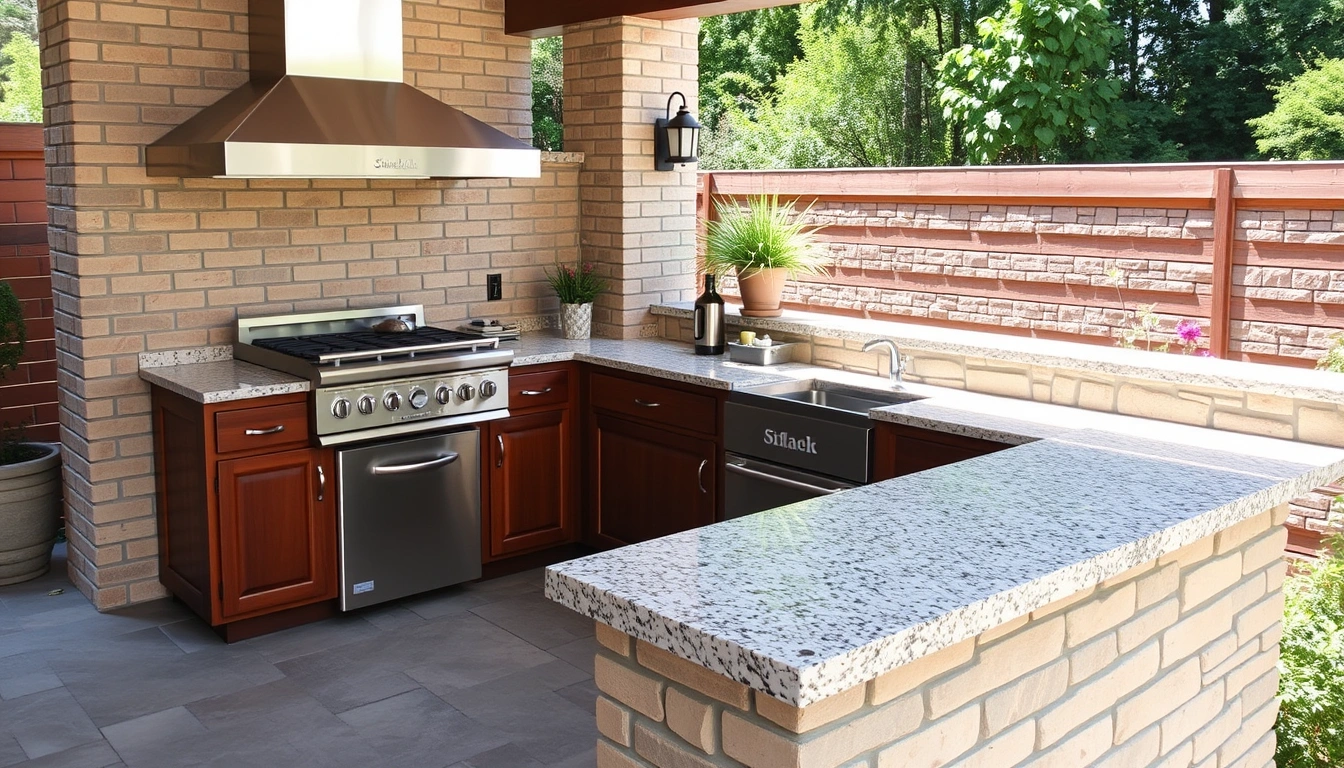
Outdoor kitchen countertops: which materials work outside depends on exposure, budget, and how much upkeep you’ll tolerate; there isn’t a single winner. For most uncovered or partly covered outdoor kitchens, I’d put porcelain first for stain resistance and UV stability, granite next for durability and heat tolerance, and stainless steel third for low-maintenance modern setups. Concrete can work, too, but only when it’s sealed correctly and detailed for movement. Marble, limestone, and most soft stones? Rough outdoors. Weather and acids chew through them.
Want the simplest rule? Full sun plus frequent rain points to porcelain or granite. Coastal air points to stainless steel or a carefully specified granite. A covered patio with a strong substructure gives concrete a fair shot. The surface is only half the picture. Seams, edges, and support fail more often than the middle of the slab, which is why outdoor kitchen countertops: which materials work outside should always be judged as a system.
A few terms help here. “Porosity” means how much liquid a material can absorb. “Freeze-thaw” means water gets into the surface, freezes, expands, and breaks the material from the inside. “Sealer” is a product that slows absorption; it does not turn a porous surface into waterproof armor. Once those three are clear, the whole decision gets less fuzzy — and a lot less marketing-driven.
For someone who wants one answer and wants to stop reading, porcelain is the strongest all-around outdoor option if the budget can handle fabrication by someone who knows large-format slabs. Granite is the most forgiving traditional pick. Stainless steel makes sense when the space is meant to feel like an outdoor version of a serious indoor prep kitchen. I wouldn’t choose marble outside unless appearance matters more than lifespan, and even then I’d expect etching, staining, and repair work. Pretty, yes. Easy? Not even close.
How do outdoor kitchen countertop materials compare?
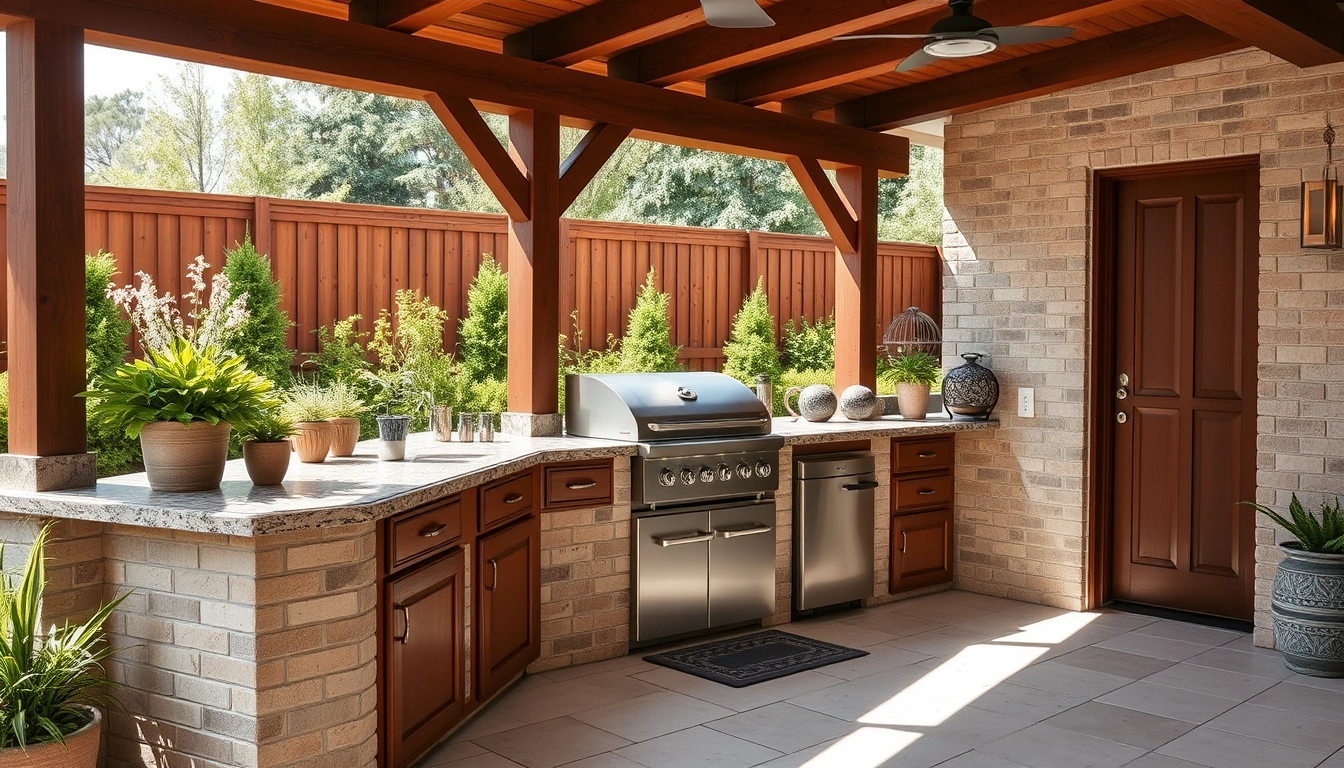
What matters outside is failure, not brochure language: UV fading, water absorption, heat, staining, and movement at the seams. A countertop that looks fine on a showroom floor can still fail on a patio in the first 12 months if it swells, cracks, or turns blotchy after the first storm. That’s the part people skip.
Porcelain slab is a fired ceramic surface, usually installed in large thin panels. It resists UV, moisture, and most stains very well, and it doesn’t need sealing. The weak spot is fabrication. Edges chip when the shop is careless, and some installers still treat porcelain like stone, which is a mistake. Talk to an experienced fabricator and installer before you commit, because porcelain edge work and substrate prep are less forgiving than they look. It’s not the right call if you want a thick, carved edge profile or if your installer has never worked with 12 mm or similar slab material. Paper-thin in places, unforgiving in practice.
Granite is still the workhorse. A dense, dark granite with low absorption can live outside for years with periodic sealing. It handles heat from a pan better than many engineered materials and is less prone to visible scratches than softer stones. The catch is simple: not all granite behaves the same. A highly porous slab can darken when wet and may need resealing more often than the sales pitch suggests. If you want a safe middle ground, granite is strong; if you want zero maintenance, it isn’t that.
Stainless steel is the easiest to keep clean. It shrugs off rain, sun, and most food acids, and it fits well in outdoor kitchens with grills, sinks, and undercounter refrigeration. The drawback is scratches, visible fingerprints, and a commercial look that some people dislike in a residential yard. It also gets hot in direct sun. I’d avoid it for a space meant to feel warm, rustic, or stone-heavy. Clean, yes. Cozy, not really.
Concrete is flexible in shape and style. Designers like it because it can be cast with integrated sinks or custom overhangs. But concrete is porous, it can crack, and it needs good sealing and careful detailing around joints. If you live where winters are hard or where water sits on horizontal surfaces, concrete asks for more attention than most owners expect.
Quartz deserves a warning. Many indoor quartz countertops use resins that can discolor in UV exposure, so I would not use standard indoor quartz outdoors unless the manufacturer explicitly allows exterior use. That distinction matters. “Quartz” in a showroom is not the same thing as “outdoor-rated quartz.” For outdoor kitchen countertops: which materials work outside, the label has to say so clearly.
What material should you choose for your climate and layout?
Outdoor kitchen countertops: which materials work outside depends on exposure, not the sample that looks prettiest in a display rack. A covered lanai in a mild climate gives you more room than an open patio with afternoon sun and winter freeze. This is where a lot of generic advice falls apart; it treats weather like it’s the same everywhere.
Start with exposure. If the countertop will sit in full sun for 6 hours or more per day, prioritize UV stability. Porcelain and stainless steel handle that better than many composites. If the space gets regular rain splash or snow melt, lower absorption matters more than color. Granite with low absorption or porcelain again makes sense. Near a pool, chlorine splash and wet feet make slip-friendly edges and easy-clean surfaces useful; avoid highly textured stone that traps residue.
Then look at structure. Overhangs greater than about 10 to 12 inches need proper support, especially with stone or concrete. A waterfall edge looks great, but it adds stress and cost. If your island has a grill cutout, sink cutout, or pizza oven nearby, the countertop must handle heat and movement around those openings. Concrete and stone need correct reinforcement; porcelain needs careful substrate prep. Miss that, and the whole thing gets twitchy.
Usage matters too. If this is a weeknight grilling station where you’ll wipe grease, set down trays, and hose the area off, stainless steel or porcelain will feel easiest. If this is a food-prep and serving island where you want a more residential look, granite is often a sensible compromise rather than an automatic best answer. If the space is mostly decorative and lightly used, you can choose for appearance first, but I’d still skip anything soft or porous.
Here’s my practical rule:
– Porcelain for maximum weather resistance and minimum sealing.
– Granite for the broadest balance of durability and appearance.
– Stainless steel for the easiest cleanup and most hygienic feel.
– Concrete when custom shape matters more than low maintenance.
– Avoid indoor quartz, marble, limestone, and soapstone if the kitchen is truly outdoors.
If you’re comparing samples, ask for the exact exterior rating or installation guidance, not just the material name. “Granite” tells you almost nothing without knowing the slab density and finish. “Outdoor porcelain” is more specific and usually safer. For outdoor kitchen countertops: which materials work outside, the spec sheet should spell out UV exposure, absorption, and maintenance.
How do I choose and install an outdoor countertop without making expensive mistakes?
Check the slab spec, the edge detail, the support system, the sealant schedule, and the installer’s experience with outdoor assemblies. The surface itself is only one line on the invoice; support and detailing decide whether it lasts. That’s why outdoor kitchen countertops: which materials work outside should be judged before the finish is even selected.
- Confirm exposure first: Note whether the counter is fully exposed, partially covered, or under a roof on at least one side. Verify how many hours of direct sun it gets and whether rain blows in. If the space gets regular wetting or freeze-thaw, soft stone is a problem. The U.S. National Park Service’s freeze-thaw weathering guidance explains why water in pores matters.
- Choose a material with the right absorption and UV behavior: Ask for outdoor-rated porcelain, a dense granite, or 304/316 stainless steel. Verify that any quartz product is explicitly approved for exterior use. If the spec sheet is vague, consult a professional and treat that as a warning sign. For product documentation, check manufacturer installation guidance such as the LATICRETE porcelain installation resources and material data sheets.
- Check slab thickness and edge treatment: Common slab thicknesses are about 2 cm or 3 cm for stone and around 12 mm for porcelain. Verify the edge profile can be fabricated cleanly; sharp miters can chip if done poorly. If the fabricator cannot explain how the edge will be reinforced, that is a problem. This is where outdoor kitchen countertops: which materials work outside often succeed or fail.
- Specify the substrate and support: Ask what is supporting the top: plywood, cement board, steel framing, or masonry. Verify the structure is level within a small tolerance and that overhangs larger than 10 to 12 inches are braced. Sagging seams or rocking corners mean the base is wrong. For guidance on structural support, the Natural Stone Institute publishes installation standards and technical resources.
- Plan for drainage and slope: A flat outdoor counter traps water and grime. Verify the surface or adjacent details shed water away from the cabinet face and into the open area, not back under the stone. If puddles sit after a hose rinse, the layout needs correction.
- Decide on sealing and maintenance before installation: Dense porcelain usually needs no sealer; granite and concrete often do. Verify the sealer is intended for exterior use and follow the reapplication interval from the manufacturer rather than guessing. If the surface darkens unevenly after wiping, absorption is too high or the sealer has failed. The Tile Tech outdoor surface guidance and sealer product labels are better references than a sales pitch.
- Inspect cutouts and seams carefully: Sink and grill cutouts are weak points. Verify that the fabricator leaves enough material around openings and uses weather-appropriate adhesives and joints. Hairline cracks radiating from a cutout are a red flag.
- Confirm thermal and chemical compatibility: Ask whether the material can handle hot pans, citrus, wine, vinegar, chlorine, and grill cleaner. Verify that the finish will not etch or haze after ordinary kitchen chemicals. If the answer is “probably,” keep looking. For outdoor kitchen countertops: which materials work outside, a clear yes matters more than confidence.
A good outdoor installation looks boring in the best sense: tight seams, even corners, no standing water, and a finish that still makes sense after a storm. Bad ones usually fail at the edges first, not in the middle. That pattern is why the details matter so much in outdoor kitchen countertops: which materials work outside.
When should you stop choosing a countertop material and change the plan?
Stop treating it like a simple countertop decision when the setting makes material choice secondary to structure, weather, or safety. At that point, the wrong answer is not “pick a different slab”; it is “change the design.” Honestly, that’s often the smarter move for outdoor kitchen countertops: which materials work outside.
Fully exposed coastal site: Salt air accelerates corrosion of fasteners and fittings — choose 316 stainless steel hardware, not just a different countertop, or rethink the location if maintenance must be minimal.
Freeze-thaw climate with standing water: Water expansion can crack porous stone and concrete — move to porcelain or a very dense granite, and redesign for drainage if puddles are forming.
Large unsupported overhangs: Stone can flex and fracture at the edge — add proper brackets or steel support before choosing the finish.
Cooktop or grill cutout with intense heat exposure: Heat concentration can stress adhesives and nearby seams — increase clearances, use heat-resistant detailing, and do not rely on a fragile surface finish.
Low-light or shaded area with constant dampness: Mildew and grime build up fast on textured or porous materials — choose a smoother, less absorbent finish and expect more cleaning.
You want a natural stone look but dislike sealing: That preference conflicts with reality — stop trying to force porous stone into a low-maintenance brief and choose porcelain or stainless instead.
Ignore those conditions, and the bill usually arrives as staining, cracking, or a maintenance routine you start to hate. If the site is the problem, no surface will fully rescue it, so outdoor kitchen countertops: which materials work outside should be chosen with the site in mind.
Outdoor kitchen countertop mistakes people actually make
The most expensive mistakes are rarely dramatic. They’re ordinary oversights that show up after the first season. I keep seeing the same ones because the materials sound impressive in a catalog, especially when outdoor kitchen countertops: which materials work outside are sold as if appearance alone were enough.
-
Choosing indoor quartz for an outdoor space. The consequence is UV-related discoloration or resin failure on a counter that was never designed for sun. The better alternative is outdoor-rated porcelain or stone explicitly approved for exterior use.
-
Buying stone by name instead of by specification. “Granite” is too broad. Some slabs absorb much more water than others. The consequence is darkening, staining, or a maintenance cycle that never ends. Ask for the exact outdoor suitability and absorption guidance instead.
-
Ignoring seam placement. A seam placed near a sink, grill opening, or unsupported overhang can telegraph cracks later. The better alternative is to place seams over solid support and away from high-stress zones.
-
Skipping drainage details. Flat counters collect water, dirt, and food residue. The consequence is staining and slippery surfaces. The correct alternative is a layout that sheds water and leaves no dead spots.
-
Using the wrong sealer or none at all on porous materials. The consequence is accelerated staining and moisture intrusion. The better alternative is to use an exterior-rated penetrating sealer on granite or concrete and follow the product’s maintenance interval.
-
Picking the finish before the climate. A honed surface can hide scratches, but it may also hold residue more visibly in some settings; a polished surface can be easier to wipe but may show water spots. The better alternative is to choose the finish based on sun, rain, and how often you clean.
The common thread is simple: the surface is not isolated from the rest of the outdoor kitchen. Material, structure, and climate have to agree, which is why outdoor kitchen countertops: which materials work outside should be selected as part of a system.
What about edge cases like coastal homes, covered patios, and pizza ovens?
Edge cases need adjusted guidance because the standard “pick granite or porcelain” advice can miss the real stress on the countertop. The right material can shift once the setting gets unusual.
For a coastal home, corrosion resistance matters as much as the slab. Salt air attacks fasteners, brackets, and appliance housings. I’d lean toward porcelain or stainless steel, with 316 stainless hardware wherever possible. Granite can still work, but only if the support system is also corrosion-aware.
For a covered patio, the material can be more flexible because UV and rain exposure are reduced, but it still has to handle heat, grease, and cleaning. That means granite, porcelain, or even concrete can be reasonable if the structure is sound and the surface is detailed correctly. A roof does not erase maintenance; it only changes which failure is most likely.
For a pizza oven, the heat story changes again. The countertop near the oven mouth needs to tolerate radiant heat and quick temperature swings. Porcelain and dense granite are usually the safer starting points, while concrete needs careful reinforcement and sealing. I’d avoid assuming a decorative finish will survive repeated high-heat use. Hot spots can be brutal.
For a small outdoor bar, stainless steel can be a practical fit because cleaning is simple and the footprint is modest. In a larger family kitchen, though, the same material may feel too commercial unless the rest of the design balances it. That’s why outdoor kitchen countertops: which materials work outside should match the style of the entire space, not just the appliance list.
The broader point is straightforward: once the site gets specific, the countertop choice should get more specific too. The wrong shortcut is to buy a material first and discover the consequences later.