Last updated: September 10, 2026
Key Takeaways
- That is true whether the kitchen cost $3,000 or $30,000.
- 316 stainless handles marine exposure better, which is why you see it specified near coasts.
- 304 stainless resists corrosion better than plain steel, but it still spots and pits in salty air or when chlorides sit on the surface.
- A cabinet with no weep path can trap condensation after 10–15 minutes of cooking, then hold it against fasteners overnight.
Outdoor kitchen trouble usually traces back to a short list: moisture intrusion, gas problems, clogged drains, corrosion, heat damage, or poor ventilation. This guide to common outdoor kitchen repair problems and what they mean helps you connect the symptom to the likely failure, the first checks, and the point where a repair turns into a rebuild. Grill won’t light? Drawer sticking? Stone cracked? Damp smell in the cabinet? The symptom often tells you more than the part number. I’m going to match the common failures to what they mean, what to check first, and where the fix stops being a simple repair and becomes a bigger rebuild.
What this applies to, and what the symptom is really telling you
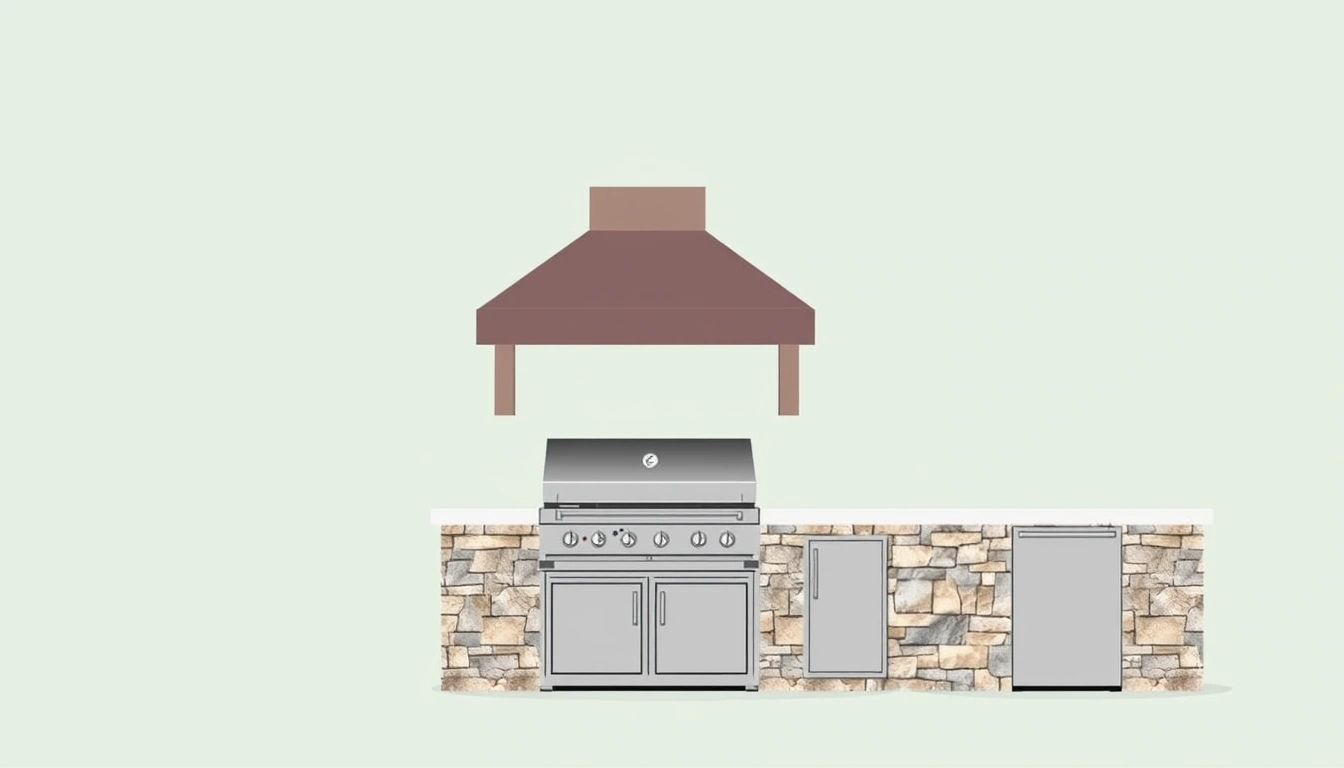
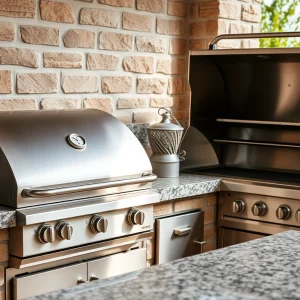
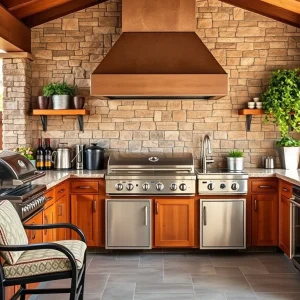
Built-in outdoor kitchens are the subject here — the kind with a grill, side burners, drawers, doors, stone or tile surrounds, and enclosed cabinetry made from stainless steel, aluminum, masonry, or coated metal. I’m assuming you already know the basics of safe shutoff, can spot obvious wear, and are trying to read the problem rather than shop for a new unit. The better first question is not “what part do I replace?” It’s “what failed to protect this assembly from weather, heat, or gas?”
Most common outdoor kitchen repair problems start at the joints and penetrations: cutouts, fasteners, seams, sink openings, and utility lines. Water sneaks in; then it sits. In coastal or humid climates, that can show up as tea-staining on stainless steel, swollen substrate, peeling sealant, or a cabinet door that no longer closes square. In a gas grill, the same moisture can turn into rusted burners, clogged carryover ports, or a failed igniter module. For weatherproofing basics, see the EPA’s guidance on moisture control and building durability and the International Code Council’s installation standards for exterior assemblies. EPA ICC
I would not treat every issue as a surface repair. Repeated corrosion within a year, cracks that keep reopening, or any gas smell? That’s not a “quick fix” situation. It is safer to consult a qualified technician or contractor than to assume it is one bad screw. True whether the kitchen cost $3,000 or $30,000.
Why is my outdoor kitchen cabinet rusting or swelling?
Rusting or swelling means water is getting into a spot that was supposed to stay dry, so the repair should start with the leak path, not the visible damage. If the cabinet is stainless steel, look for brown staining at welds, fasteners, door seams, and the bottom flange; if it is a wood-composite or framed enclosure, swelling usually means the substrate has absorbed water and lost shape.
People often assume “stainless” means immune. It doesn’t. Grade matters. 304 stainless resists corrosion better than plain steel, but it still spots and pits in salty air or when chlorides sit on the surface. 316 stainless handles marine exposure better, which is why you see it specified near coasts. Even then, poor drainage beats the metal. A cabinet with no weep path can trap condensation after 10–15 minutes of cooking, then hold it against fasteners overnight. Nasty little trap.
What I check first is plain and unglamorous: under the sink cutout, around access panels, at the lip where the countertop meets the cabinet, and inside the lower corners. Any sealant gap wider than a few millimeters can admit water. If the swelling is only in a door skin or trim strip, a localized replacement may work. If the frame has moved or the door opening is racked out of square by more than about 3 mm, the enclosure may need partial rebuild, not patching.
How do I tell if the grill problem is gas, ignition, or a dirty burner?
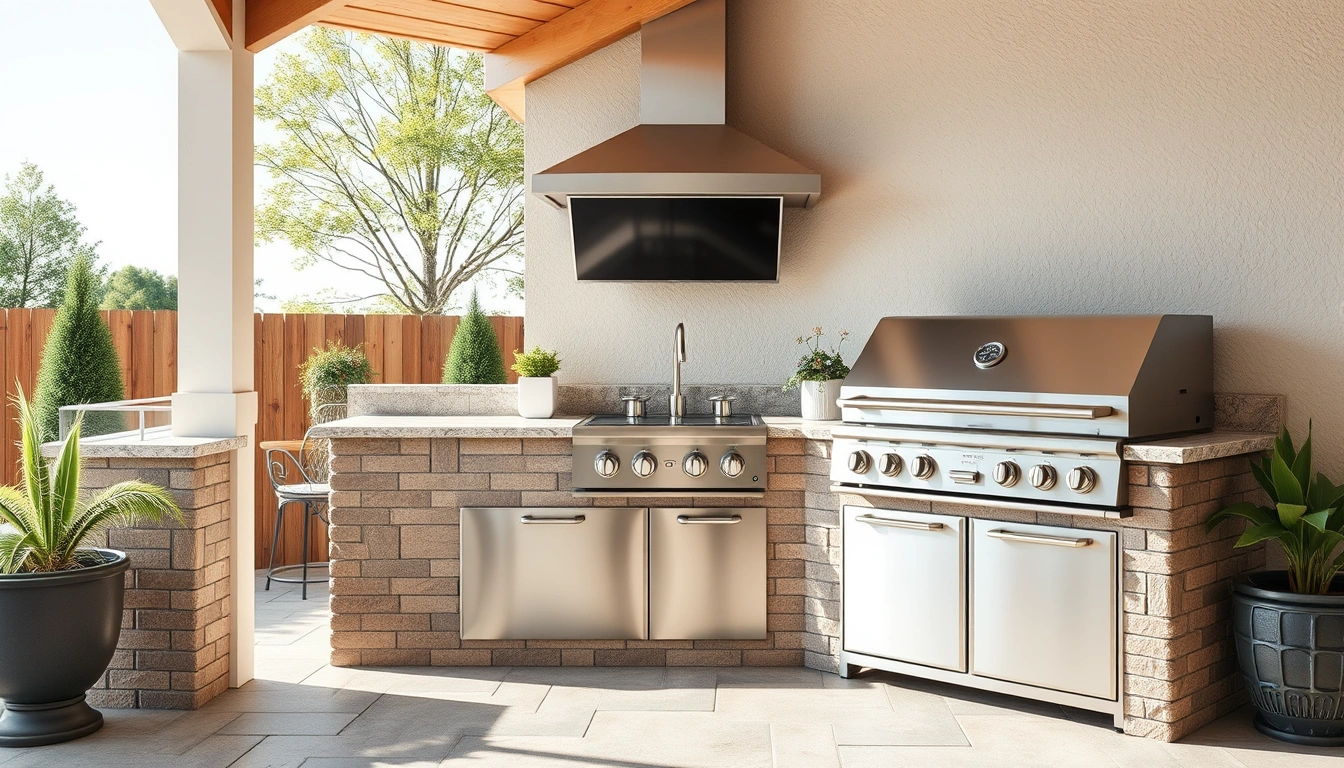
A grill that lights poorly usually has a burner-port blockage, a weak ignition source, or a gas-supply problem; the pattern tells you which one is most likely. One burner failing while the others work points to a burner or igniter issue. All burners acting weak at once points more toward supply pressure, a regulator, or a valve problem. For basic grill safety and maintenance, Weber’s care guidance and the National Fire Protection Association’s outdoor cooking recommendations are useful references. Weber NFPA
Here’s the sequence I would use.
- Shut the gas at the source. Close the LP cylinder valve fully or turn off the shutoff on a natural gas line, then wait at least 5 minutes before opening panels. Verify the smell of gas disappears; if it does not, stop, consult a qualified gas professional, and treat it as a leak problem. A continuing odor means the repair is not about ignition.
- Inspect the burner ports and crossover channels. Remove grates and flavorizer bars, then check for grease, rust flakes, and insect nests. Use a nylon brush or a wooden pick, not a metal wire that can enlarge ports. Verify each port is open to light. If more than a few ports are blocked across one burner, flame will lift, flutter, or stay yellow.
- Check the igniter gap and battery or module. For battery igniters, confirm a fresh 1.5V battery if that model uses one. For electronic igniters, listen for a click at the electrode. The electrode tip should sit close to the burner, usually around 3–5 mm depending on the design. No spark or a spark that jumps to the wrong metal means the igniter path is faulty.
- Look at the flame pattern on a low setting after reassembly. A healthy burner usually shows mostly blue flame with small yellow tips. Verify the flame is even along the burner length. If you see long yellow flames, lifting, or roaring, there may be excess air, dirt, or pressure trouble.
- Test one burner at a time. Light a single burner, then add others. If performance collapses as soon as demand increases, the regulator, hose, or supply line may be undersized or partially blocked. That is not a cleaning issue.
- Check the regulator vent and hose routing. The regulator vent should not be buried against a wall or wrapped in tape. The hose should not kink at a 90-degree bend within the first 30 cm. Verify the line has slack, not tension. A crushed hose can act like a half-closed valve.
- Do a leak check only after reassembly. Use a soap-and-water solution on fittings and watch for bubbles for at least 30 seconds. Any growing bubble cluster means a leak. No bubbles and a stable flame pattern suggest the fault was localized to burners or ignition.
If the grill uses electronic ignition and the burner tubes are clean, a failed module or corroded electrode is often the next step. If the whole system is starved for gas, no amount of scrubbing will fix it. That’s where the symptom stops lying and starts telling the truth: the problem is upstream.
What does a cracked countertop or loose tile usually mean?
A cracked countertop or loose tile usually means movement underneath, not just a bad surface finish. In an outdoor kitchen, thermal swing, freeze-thaw cycles, settling, and trapped moisture all stress stone, porcelain, and grout. A hairline crack in a slab may be cosmetic; repeated cracking through the same line suggests the support structure is flexing.
The first split I make is between a crack in the finish and a crack that follows a seam, support point, or cutout. Cracks radiating from a sink or grill opening often mean the cutout edge was left too thin or inadequately reinforced. Tile that sounds hollow in a 15–20 cm patch may have lost bond because the thinset failed, the substrate moved, or water got behind it and broke the bond cycle.
Grout deserves less faith than most people give it. Grout is not waterproofing; it is a filler. If a grout line opens wider than about 2 mm, or if the same line keeps cracking after regrouting, the substrate underneath is probably moving or the joint needs an expansion gap. A generic patch only hides the symptom for a season. For tile and stone movement guidance, the Tile Council of North America and Natural Stone Institute both emphasize movement joints and proper substrate prep. TCNA Natural Stone Institute
I would replace isolated cracked tiles or localized sealant failure when the structure beneath is stable. I would not chase cracks on a countertop that flexes when you lean on it, or around a sink cutout that already shows rust stains or swelling. That means the repair needs support correction, waterproofing, or both. Straightforward? Not really. But it is better than chasing the same crack twice.
Which repair problems are just maintenance, and which are warning signs?
Some problems are routine maintenance; others are signs the outdoor kitchen is failing as an outdoor assembly, not just wearing out. A dirty burner, a sticky hinge, or a loose door magnet can usually be fixed without drama. Repeated rust, recurring leaks, or a sagging countertop are warning signs that the system is no longer shedding water and heat the way it should.
The maintenance bucket includes a hinge that squeaks, an igniter that needs a battery, a grease tray that overflows because it was not emptied, and a drain trap that holds debris. Annoying, yes. Localized, too. The warning-sign group is different: water inside cabinet walls, rust returning after cleaning, tile debonding in the same area, or a gas valve that sticks after exposure to corrosion.
Pattern and recurrence matter most. If a door goes out of alignment once after a hard wind and re-aligns easily, that is normal wear. If the same hinge keeps loosening because the mounting material has stripped, the mounting system is wrong for the load. If a sink cabinet smells musty 24 hours after rain, there is likely a hidden leak or poor ventilation. For corrosion basics on stainless and fasteners, the ASM materials handbook and NACE/AMPP guidance are useful references. AMPP ASM International
My take is simple: cosmetic damage is tolerable; structural movement is not. A chipped trim piece can wait. A cabinet base that sits in standing water for even a short time after each storm should not be ignored, because the next failure is usually not cosmetic.
When should I stop and call for help instead of repairing it myself?
Stop when the repair crosses from visible wear into gas, structural, or concealed water damage. In those cases, the symptom is telling you that the safer fix is diagnosis, not guesswork.
Smell of gas that does not clear after shutoff: This means a leak may be present in a hose, fitting, valve, or supply line — Do not relight anything; shut off the supply and have the system inspected before use.
Repeated bubbling in a soap test at the same fitting: This means the joint is not sealing reliably — Stop tightening at random; the fitting may need replacement, not more torque.
Countertop flexes or bounces near a cutout: This means the support beneath the surface is failing — Stop patching the top layer and address the framing or substrate.
Water inside a cabinet after rain, even with doors closed: This means there is a leak path or failed weather seal — Dry it out, trace the entry point, and fix the ingress before any cosmetic repair.
Rust that returns within weeks after cleaning: This means corrosion is active, not superficial — Replace the affected component or revise the material choice, especially in coastal or poolside settings.
Burner flame lifts, roars, or turns mostly yellow after cleaning: This means the burner, venturi, or gas pressure may be wrong — Stop using that burner and check the supply and burner assembly.
The mistakes that make outdoor kitchen repairs fail again
The most common mistake is sealing over the leak without tracing it. Smear silicone around a crack but leave the water entry above it, and the damage keeps growing behind the finish. The right move is to find the high point of ingress, then seal or flash that point first.
A second mistake is using indoor-grade hardware outdoors. Plain steel screws, hinges, and fasteners can rust fast in a wet environment, and once they expand they strip the hole or stain the face. I would use exterior-rated or stainless fasteners sized for the substrate, not a generic replacement from a drawer.
A third mistake is cleaning gas parts too aggressively. Wire-brushing burner ports with the wrong tool can enlarge them and distort the flame. The result is uneven heat, soot, and sometimes more clogging. A soft brush and careful clearing are usually enough.
A fourth mistake is regrouting over movement. Grout cracks because the joint moves, not because it is lonely. If you do not leave an expansion joint where the manufacturer expected one, the repair fails again in the first hot-cold cycle.
A fifth mistake is ignoring ventilation around the grill cavity. If the enclosure traps heat, igniter modules, hoses, and adjacent finishes suffer. A repair that looks fine on day one can fail after a few dozen cooking cycles if airflow is poor.
What does a good repair look like after the fix?
A good repair restores function and stops the cause, not just the symptom, and you can usually tell within one season of weather exposure. The grill lights cleanly, the flame is steady and mostly blue, the cabinet closes square, and the repaired area stays dry after rain. If the fix was structural, the surface should not telegraph movement through a crack line or loose tile.
For a burner repair, I want one clean ignition within a few seconds, no delayed whoof, and no flare that jumps sideways. For cabinetry, I want doors aligned with roughly even reveals and hardware that does not pull loose when the door is opened repeatedly. For stone or tile, I want the repair line to remain stable after temperature swings of 20°F or more, which is common across a single day in many climates.
The best outcome is not dramatic; it is a repair you do not need to revisit. If you have to revisit the same spot every month, the problem has not been solved. It has been postponed.
FAQs
Why does my outdoor kitchen smell musty after rain?
That usually means water is trapped in a cabinet, substrate, or drain area. Dry it fully, then trace the entry point at seams, penetrations, and sink or grill cutouts.
Can I repair rust on stainless steel?
Yes, if it is surface staining or early corrosion. If pitting is deep or the rust keeps returning, the underlying material or exposure condition needs to change.
Why do my outdoor kitchen tiles keep cracking in the same place?
The substrate is probably moving, or the joint needs an expansion gap. Replacing the tile alone will not fix a flexing base.
Is a weak grill flame always a gas-supply problem?
No. It can also be blocked burner ports, a clogged venturi, a bad igniter path, or a regulator issue. The flame pattern and whether one or all burners are affected help narrow it