Last updated: October 21, 2026
Quick Answer: Four accessories usually do the most work in an outdoor kitchen: a pull-out trash bin, drawer inserts, a paper towel holder, and a cutting board. In this guide to outdoor kitchen drawer inserts, trash pull-outs, and utility accessories, those four pieces matter most because they reduce steps, contain mess, and keep the prep area usable every day.
Outdoor kitchen accessories are the small cabinet hardware pieces that make the space easier to use every day: a pull-out trash bin, drawer inserts, a paper towel holder, a cutting board, and an accessory rail. If the cabinets are the bones of the kitchen, these are the parts that save steps, keep mess contained, and stop the counter from turning into a dumping ground.
The accessory choices that make an outdoor kitchen feel finished
The right cabinet accessory turns an outdoor kitchen from “a grill island with doors” into a working prep space. The most useful pieces are the ones that reduce carrying, bending, and cross-traffic: a pull-out trash bin near the prep zone, drawer inserts for flat tools and small items, a paper towel holder where spills happen, and a cutting board stored where it can dry and be grabbed fast.
The best way to think about accessories is by task, not by category. Prep needs a cutting board and a place for paper goods. Cleanup needs trash access and a place to hold a roll of towels without exposing it to constant weather. Small tools need drawers that divide space so tongs, thermometers, foil, and skewers do not slide into one noisy pile.
One practical rule helps keep the layout sane: every accessory should earn its spot in under 10 seconds of saved motion. If a person has to walk around the island to throw away trim, that trash pull-out is in the wrong cabinet. If the paper towel holder sits above the grill lid, it will live in grease and heat. If the drawer insert forces a jumbo bottle opener into a 2-inch slot, it is decorative, not useful.
This page is about cabinet accessory choices, not the cabinets themselves. It fits the larger planning guide for an outdoor kitchen project, but the job here is narrower: choose the pieces that make daily use easier without overloading the space.
Which outdoor kitchen accessories should come first?
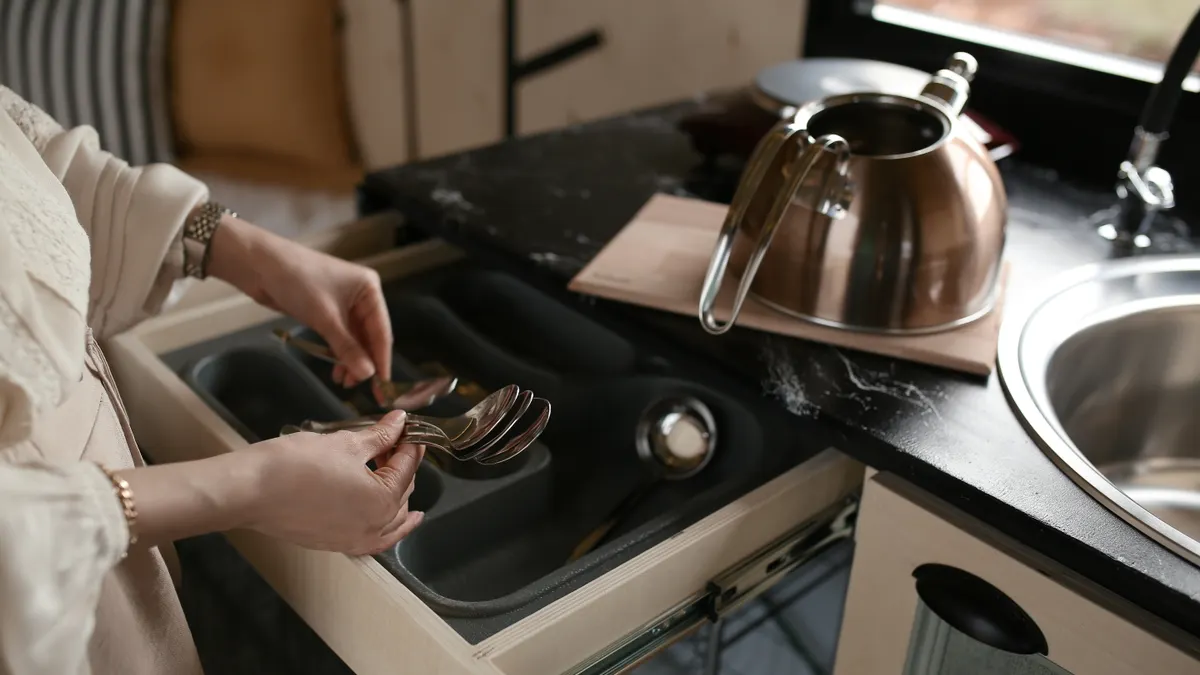
Start with the pull-out trash bin, then add the drawer insert and paper towel holder. Those three handle the most common outdoor tasks: trimming food, wiping spills, and clearing scraps without crossing the patio with wet hands.
The order matters because each piece solves a different problem. Trash is about cleanup speed. Drawer inserts are about control and visibility. Paper towels are about interruptions; if the roll lives indoors, people stop using it outside. A cutting board is next if the prep surface is small or if you want a dedicated board that stays near the grill. An accessory rail is useful when the countertop is crowded and the wall or side panel has unused vertical space.
A simple planning sequence keeps the selection grounded:
- Stand at the main prep area and name the three actions that happen most often: trimming, wiping, and tossing scraps. Put the pull-out trash bin closest to the first place where food gets cut or plated.
- Measure the cabinet opening for the trash pull-out in inches, not guesses. The common failure is buying a bin system that fits the cabinet face but not the internal width or drawer clearance.
- Choose drawer inserts after listing the actual contents: foil, wraps, knives, lighters, thermometers, tongs, and small spice jars. The insert should match the objects, not the other way around.
- Place the paper towel holder where it stays dry and reachable in one step, usually near the prep counter rather than beside the grill firebox.
- Add the cutting board last so it supports the counter layout. A removable board with a dry storage slot is better than a board that blocks a drawer.
The common mistake is buying accessories one by one without checking clearances. That usually costs either usable storage or a door that no longer opens fully. The fix is to sketch the cabinet interior on paper and note hinge swing, slide depth, and the lip of the counter. A 24-inch cabinet opening may not accept a 24-inch insert once hardware is inside, so the opening should be checked against the manufacturer’s exact dimensions.
A second mistake is over-accessorizing a narrow island. If there is only one base cabinet and one drawer bank, a trash pull-out may deserve the space more than a specialty tray or extra divider set. The point is a better workflow, not a fuller spec sheet.
How do you choose a pull-out trash bin for outside use?
Choose a pull-out trash bin with a cabinet mount, a lid or frame that keeps the liner stable, and corrosion-resistant hardware. Outdoors, the failure mode is not style; it is movement, moisture, and stink.
A good pull-out system needs three things: a smooth slide, enough depth for a standard liner, and hardware that will not seize after repeated damp exposure. Stainless steel or coated steel parts are the safer choice for humid or coastal settings than plain metal. A full-extension slide is easier to live with than a shallow one because the bin opens far enough to drop in scraps without brushing the cabinet face.
The cabinet size matters as much as the bin itself. A common setup uses a single or double-bin pull-out in a 15-inch, 18-inch, or 21-inch base cabinet, but the exact fit depends on the manufacturer’s frame and slides. The cabinet opening, not the door width alone, should decide the model. Leave room for the liner to lift in and out without catching on the face frame or the lower lip.
Placement matters too. Put the trash pull-out within one step of the prep surface, but not directly under a hot grill box or next to an open flame. Heat shortens the life of liners and makes the cabinet area unpleasant. If the outdoor kitchen is used for messy prep, a lid or enclosed frame helps contain odor and insects. In a breezy, open layout, the bin should still be easy to remove for cleaning or liner changes.
The trade-off is simple: bigger trash capacity takes more cabinet space. A double-bin system is useful if recycling or compost separation is part of the routine, but it can eat the same storage footprint that might otherwise hold cleaning supplies. If storage is already tight, a single pull-out bin often works better than forcing a large two-bin unit into a cabinet that is too small for it.
Drawer inserts that keep small tools from turning into clutter
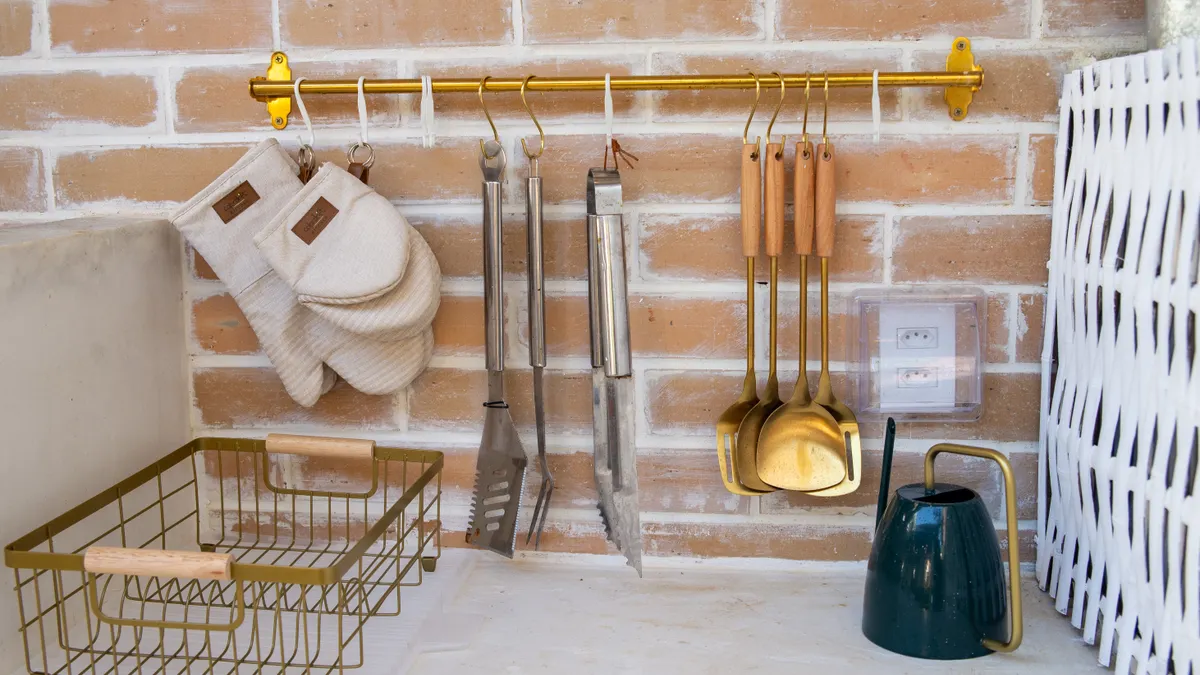
Drawer inserts make outdoor kitchen drawers useful because they stop light tools from sliding around and getting buried under heavier items. Without them, one open drawer becomes a mixed pile of foil, lighters, skewers, towels, and random hardware.
The best insert is usually the one matched to the drawer’s job. A shallow drawer near the prep zone works well for slim trays and divided compartments. Deeper drawers are better for bulkier items, but they still need separators so the contents do not collapse into one stack after a few openings. In outdoor use, removable trays are easier to clean than built-in dividers with too many corners.
For a practical setup, think in layers. The top layer can hold frequent-use items like foil, zip bags, an instant-read thermometer, and a small flashlight or grill lighter. The next layer can hold backup tools, serving utensils, and sealed spice containers if the drawer is dry and protected. If the drawer is only 6 inches deep, consult the cabinet manufacturer or a qualified installer before trying to use it like a pantry.
A drawer insert also protects the cabinet finish. Loose metal tools scrape against the bottom and edges of the drawer every time the cabinet opens. Over time, that creates noise and wear that people often mistake for “cheap hardware.” In many cases, the cabinet is fine; it just needs a tray.
The biggest mistake is packing the insert too tightly. A drawer that is 90% full is hard to sort and slow to clean. Leave empty space so the contents can be lifted out without a fight. Another mistake is using indoor organizers that warp or crack in heat and humidity. Plastic inserts can work, but they should be the kind meant to handle temperature swings, not thin bins that deform after a season.
If the drawer sits in direct sun for part of the day, a darker insert may run hotter to the touch than a lighter one. That can matter when someone reaches in for a tool during cooking. The better approach is a simple, removable organizer that can be lifted out and rinsed.
Where should the paper towel holder and cutting board go?
The paper towel holder should go near prep and cleanup, while the cutting board should store flat, dry, and within one easy reach of the counter. Those two accessories matter because they handle the most frequent small messes in an outdoor kitchen.
A paper towel holder works best when it is protected from direct spray, grill heat, and constant sun. Mounted inside a cabinet door or under a counter edge, it stays cleaner than a freestanding roll on the countertop. If the kitchen layout includes a side panel or accessory rail, the holder can live there too, as long as it does not block drawer travel or snag on people moving past. A roll that is exposed to rain or greasy wind quickly becomes annoying instead of helpful.
The cutting board belongs close to the prep surface, not hidden in a deep cabinet where it gets forgotten. A board stored flat on a shelf or in a dedicated slot is easier to dry than one that leans against a damp wall. If the board is part of a slide-out or pull-out system, make sure the mechanism does not force the board to rub against a dirty cabinet floor. That keeps grit off the food-contact surface.
Material matters. A cutting board used outside should be easy to clean and not overly sensitive to moisture. A board with a dedicated storage spot is better than one that gets stacked with pans, cleaning supplies, or raw fuel containers. Keep it separate from anything that smells like chemicals.
A common error is placing the paper towel holder too far from the sink or prep zone because it looked neater on the plan. The cost is small but constant: drips get wiped on clothing, countertops stay messy longer, and towels are used less often because they are not handy. Another error is storing the cutting board in a cabinet with poor drainage. That can trap moisture and leave the board with a lingering smell.
Accessory rail or cabinet mount: what fits the layout?
An accessory rail works best when wall or side-panel space is available and cabinet space is scarce. A cabinet-mount accessory is better when the kitchen needs weather protection and a cleaner built-in look.
The rail is the flexible option. It can hold a paper towel holder, hooks, small bins, or even a board holder if the system is designed for it. That makes sense in compact layouts where every cabinet inch counts. A rail also keeps frequently used items visible, which is helpful during cooking when speed matters more than a perfectly hidden look.
The cabinet-mount approach is more protected and usually better for trash pull-outs and drawer inserts. A pull-out trash bin belongs inside a cabinet because it contains odor and keeps the liner out of the weather. Drawer inserts also need a real drawer, not an exposed rail. In practice, most outdoor kitchens use both: cabinet-based storage for the heavy lifting and a rail for small convenience pieces.
There is a trade-off here. Rails are accessible, but they collect grime more easily and can look cluttered if every inch gets used. Cabinet mounts are tidier, but they consume valuable interior volume and may require more careful sizing. If the outdoor kitchen has a narrow run of base cabinets, a rail can preserve storage for the accessories that really need to live behind doors.
One useful check is the sightline from the main seating area. If the kitchen faces guests, a rail with towels, tools, and hanging containers can read as messy unless it is tightly curated. If the side of the island is hidden from view, the rail becomes a practical work zone. The best choice may depend on whether the accessory should disappear or stay within arm’s reach.
For builders and planners, this is the kind of decision that belongs in the broader outdoor kitchen plan before finishes go in. The accessory choice changes how the cabinet is used every day, so it should be settled before the opening sizes are locked.
What outdoor kitchen accessories are worth skipping?
Skip accessories that save almost no time, duplicate another piece, or crowd a cabinet better used for essentials. A third specialty tray is usually less useful than a correctly placed trash pull-out or one good drawer insert.
The first item to question is anything that looks clever but lacks a daily job. If a holder or organizer does not shorten a routine task, it becomes visual noise. The second item to question is an accessory that works only if the cabinet remains dry and perfectly clean. Outdoor kitchens are exposed to dust, humidity, grease, and weather swings; fragile fittings do not age well there.
A few red flags are easy to spot. If the accessory requires a very specific container size, it may lock the cabinet into one brand. If it depends on delicate hinges or thin plastic clips, replacement parts may become the real cost. If it forces the door to open only partway, it is probably interfering with normal use. A cabinet accessory should make a space easier to live with, not harder to service.
The better buy is usually the one that reduces friction in the most common task. For many outdoor kitchens, that means a pull-out trash bin, a well-fitted drawer insert, and a protected paper towel holder before anything decorative. A cutting board and accessory rail round out the setup when the layout supports them. Pieces that sound impressive but do nothing for daily prep are easy to skip.
Key Takeaways
- Start with the accessories that solve constant jobs: trash, wiping, prep, and small-item control.
- Match each piece to the cabinet opening and the way the kitchen is actually used.
- Put the pull-out trash bin near prep, not near heat.
- Choose drawer inserts for the things people reach for most often, not for every possible item.
- Keep paper towels and cutting boards dry, visible, and close to the work zone.
- Skip accessories that eat cabinet space without saving motion or mess.
What accessories make an outdoor kitchen more useful?
The most useful outdoor kitchen accessories are a pull-out trash bin, drawer inserts, a paper towel holder, a cutting board, and a well-placed accessory rail. These pieces speed up prep and cleanup without adding much complexity. The right set depends on cabinet size and how often the space is used for real cooking rather than just serving.
Should an outdoor kitchen have a trash pull-out?
Yes, a pull-out trash bin is one of the most practical outdoor kitchen accessories. It keeps scraps contained, reduces trips across the patio, and makes cleanup faster at the prep area. The cabinet must have enough internal space for the frame and slide, and the bin should be kept away from direct heat.
Drafted with AI; not yet reviewed by a person.